
For Healthcare Professionals
Get a clear picture of brain amyloid plaques, a pathological hallmark of Alzheimer’s disease.
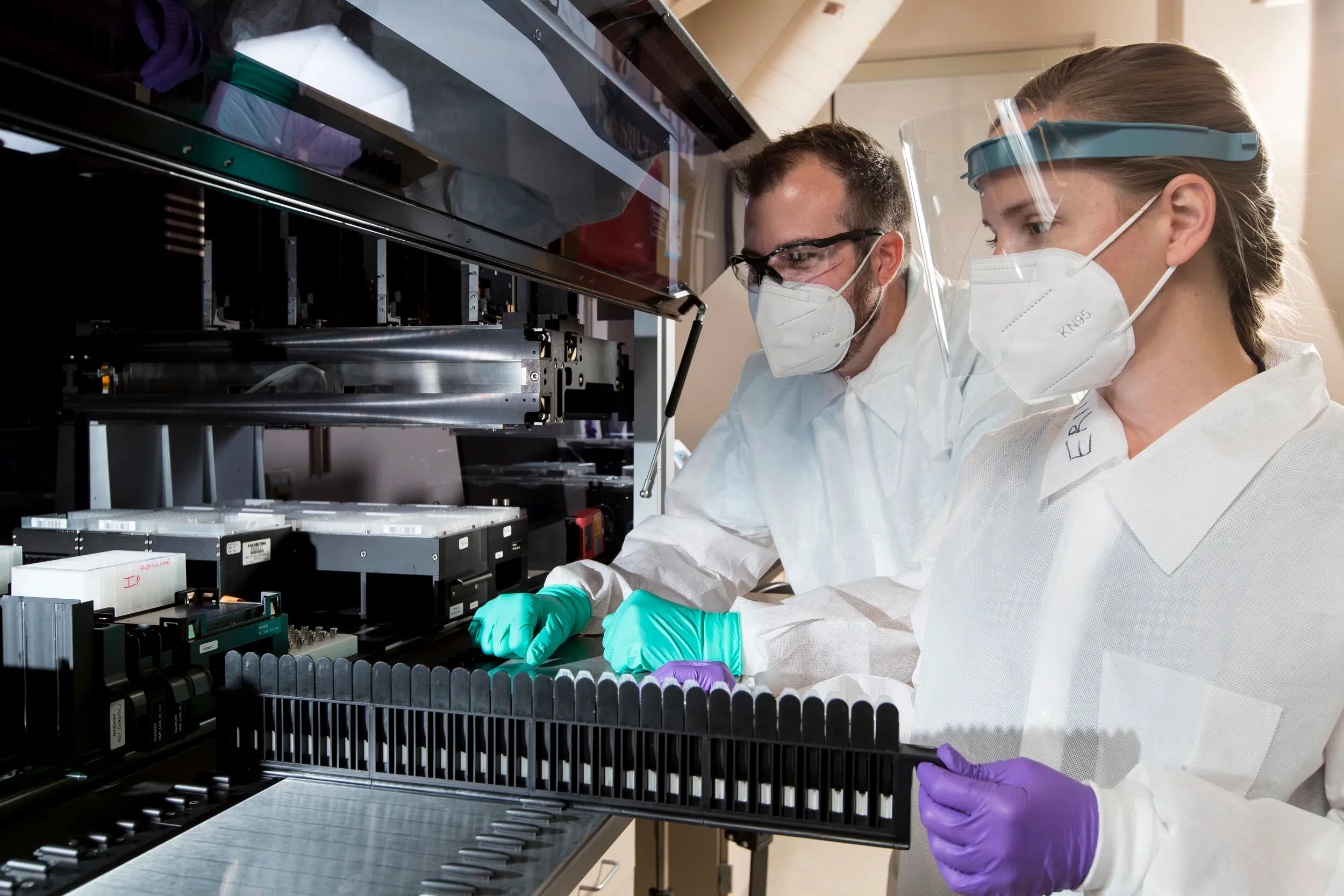
Lorem ipsum dolor sit amet, consectetur adipiscing elit, sed do eiusmod tempor incididunt ut labore et dolore magna aliqua. Ut enim ad minim veniam, quis nostrud exercitation ullamco laboris nisi ut aliquip ex ea commodo consequat. Duis aute irure dolor in reprehenderit in voluptate velit.
Schedule a Blood Draw
Through a simple blood draw, the PrecivityAD2® test determines your likelihood (positive or negative) for the presence of amyloid plaques in the brain, one of the brain pathology findings of Alzheimer’s disease.
Gain clarity into Alzheimer’s disease pathology
Accurate, early diagnosis is possible with high precision Precivity® blood tests. Through a simple blood draw, the PrecivityAD2® test determines your likelihood (positive or negative) for the presence of amyloid plaques in the brain, one of the brain pathology findings of Alzheimer’s disease.
For Patients
PrecivityAD2® provides easy access to accurate answers. Learn more about the Precivity tests, how they work, and how to get started.
For healthcare professionals
Seamlessly integrate Precivity® into your practice to help remove barriers like uncertain wait times or safety risks for your patients. Learn about the advantages of BBM tests, explore test features, and access clinical data.
Lorem ipsum dolor sit amet
Lorem ipsum dolor sit amet, consectetur adipiscing elit, sed do eiusmod tempor incididunt ut labore et dolore magna aliqua. Ut enim ad minim veniam, quis nostrud exercitation ullamco laboris nisi ut aliquip ex ea commodo consequat.
Health Care Professionals
Order a test
If you are interested in offering the PrecivityAD® test to your patients, please complete the form to start the process for opening a test account and a C₂N representative will be in touch with you shortly.
Commitment to Quality
The PrecivityAD2 tests exceed clinical guideline performance standards for blood tests intended to assist in making an AD diagnosis. We offer the test under CLIA in most of the US and a CE Mark in the European Union. C2N granted breakthrough device designation from US FDA in 2019.
Exceptional scientific and clinical standards for laboratory diagnostic testing
Commitment to clinical laboratory best practices

Quality focus and compliance with applicable regulatory requirements
Ongoing internal review and improvement
Understanding Alzheimer's
Alzheimer's disease is the most common cause of dementia, a general term for memory loss and other cognitive issues serious enough to interfere with daily life. Alzheimer's disease accounts for 60-80% of dementia cases.
While AD makes up nearly 80% of all dementias, most individuals with AD will have another type of dementia, making it challenging to diagnose.1
~3 out of 4 people living with dementia are not diagnosed; most under diagnosed individuals are in the early stages of disease.1,2
The average time from symptom onset to diagnosis is 3.6 years.2
Why Diagnose AD
As the number of people living with AD grows, swift, precise diagnosis matters more than ever. An early AD diagnosis can empower patients to proactively manage their health, allow for independent decision-making, and ultimately enhance their quality of life. And while traditional biomarker assessments face barriers and drawbacks, high performing blood tests like PrecivityAD2 can address the need for widely accessible, equitable, and scalable testing options to aid in a timely AD diagnosis.

Advantages of BBM Tests
The PrecivityAD2 test was clinically validated in 583 individuals with cognitive impairment across 2 well-characterized, independent cohorts. The QUIP-II study evaluated how specialists were able to use the PrecivityAD2 test to optimize AD clinical decision-making in 203 patients from real-world settings.
Clinical Trials
According to the National Institute on Aging, numerous benefits exist to participating in a clinical trial.
Lorem ipsum dolor sit amet test
- Item A
- Item B
- Item C
For more information about clinical trials, please visit the National Institute on Aging.

Traditional Biomarker Assessments for Brain Amyloid Pathology Face Barriersand Drawbacks
Amyloid PET imaging quantifies the density and distribution of amyloid plaques in the brains of asymptomatic and symptomatic patients.1-3
Lorem ipsum dolor sit amet
- Cost and accessibility
- Exposure to radiation
- Does not dynamically capture biomarker production or clearance
- Clinical value dependent on imagequality and interpretation
- PET tracer adverse reactions
CSF analysis measures solublebiomarkers of AD pathology in thecerebrospinal fluid.4,5
Lorem ipsum dolor sit amet
- Contraindicated in patients taking anticoagulants
- Complicated spinal anatomy
- Does not directly measure accumulatedbiomarker load
- Invasive and patient hesitancies
An early diagnosis helps a researcher continue doing the work he loves.
Resources on Alzheimer’s Disease
National Institute on Aging (NIA): Offers comprehensive information on Alzheimer’s disease, including a video on “How Alzheimer’s Changes the Brain.”
NIA Alzheimer’s Disease Education and Referral (ADEAR) Center: 800-438-4380 (toll-free) - 8:30 a.m. to 5:00 p.m. Eastern Time, Monday – Friday. NIA’s ADEAR Center offers information, Spanish language resources, clinical trial information and free print publications about Alzheimer’s disease and related dementias for families, caregivers, and health professionals.
Center for Disease Control (CDC) and Prevention – Alzheimer’s disease: Offers comprehensive information on Alzheimer’s disease. Including additional links to assist in the understanding of the disease.
U.S. Department of Veterans Affairs: Dementia Care (including Alzheimer’s) & VA Research on Alzheimer’s Disease
Alzheimer's Association: 800-272-3900 (toll-free) 24/7 support line - Available in all languages. 866-403-3073 (TTY/toll-free). Visit the Alzheimer’s Association Web site for a variety of helpful resources including: Inside the Brain video of how the mind works, 10 early signs and symptoms of Alzheimer’s and communicating with doctors or healthcare professionals.
MedlinePlus: National Library of Medicine offers resources and information about Alzheimer’s disease.
BrightFocus Foundation: Explore the Alzheimer’s Tool Kit on understanding Alzheimer’s, managing Alzheimer’s and living with the disease.
Alzheimer’s Drug Discovery Foundation (ADDF): ADDF is a non-profit foundation committed to rapidly accelerate the discovery of drugs to prevent, treat and cure Alzheimer’s disease. Cognitive Vitality offers a seven-step brain health program.
UsAgainstAlzheimer’s (UsA2): UsA2 is an organization committed to ending Alzheimer’s through effective leadership, collaborative advocacy and strategic investments.
Downloadable Guides
Latest Publications
Morbi sed imperdiet in ipsum, adipiscing elit dui lectus. Tellus id scelerisque est ultricies ultricies. Duis est sit sed leo nisl, blandit elit sagittis.
Coppinger, J., West, T., Kirmess, K.M. et al. Independent validation of the PrecivityAD2™ blood test to identify presence or absence of brain amyloid pathology in individuals with cognitive impairment. npj Dement 2025;1 (23) doi.org/10.1038/s44400-025-00026-y
Ikanga J, Patel SS, Roberts BR, et al. Association of plasma biomarkers with cognitive function in persons with dementia and cognitively healthy in the Democratic Republic of Congo. Alzheimers Dement (Amst). 2023;15(4):e12496. doi:10.1002/dad2.12496
Rissman RA, Langford O, Raman R, et al. Plasma Aβ42/Aβ40 and phospho-tau217 concentration ratios increase the accuracy of amyloid PET classification in preclinical Alzheimer's disease. Alzheimers Dement. 2024;20(2):1214-1224. doi:10.1002/alz.13542
Understanding Your Results
The PrecivityAD2® blood test or the PrecivityAD® blood test will tell your healthcare professional your likelihood for having changes in the brain associated with Alzheimer’s disease.

PrecivityAD2®
The main test result of the PrecivityAD2® blood test is a score called the Amyloid Probability Score 2 (APS2), which determines a patient’s likelihood (positive or negative) for presence of amyloid plaques in the brain.
Precivity-ApoE®
The Precivity-ApoE® blood test reports a patient’s ApoE protein types (E2, E3, or E4) to determine APOE status which may be useful for decision-making about treatment options.
Why Early Diagnosis Matters
Patients with signs or symptoms of cognitive decline gain important health information by knowing if their brain harbors the markers described above, also known as amyloid plaque, one of the hallmark indicators of Alzheimer’s disease.
Gain Understanding
If Alzheimer’s markers are not detected, additional costly tests may be avoidable and your healthcare professional can explore other causes for your memory and thinking issues.
Get Appropriate Medical Attention
Receiving appropriate medical attention through earlier detection and beginning a comprehensive care plan that may include disease-modifying and symptomatic treatments.
Start Lifestyle Adjustments
Letting you jumpstart lifestyle modifications that may slow the disease, such as an active aerobic exercise program, getting enough high-quality sleep, and optimizing your diet.
Like other tests that evaluate for brain amyloid pathology in clinical patients [such as amyloid PET scan or cerebrospinal fluid (CSF) testing] the Precivity® blood tests by themselves do not diagnose Alzheimer’s disease. Healthcare professionals interpret the test results along with other medical information.
Why Early Diagnosis Matters
Patients with signs or symptoms of cognitive decline gain important health information by knowing if their brain harbors the markers described above, also known as amyloid plaque, one of the hallmark indicators of Alzheimer’s disease.
Rich Text HeadingH3
Lorem ipsum dolor sit amet, consectetur adipiscing elit, sed do eiusmod tempor incididunt ut labore et dolore magna aliqua.
Rich Text HeadingH3
Lorem ipsum dolor sit amet, consectetur adipiscing elit, sed do eiusmod tempor incididunt ut labore et dolore magna aliqua. Ut enim ad minim veniam, quis nostrud exercitation ullamco laboris nisi ut aliquip ex ea commodo consequat. Duis aute irure dolor in reprehenderit in voluptate velit esse cillum dolore eu fugiat nulla pariatur.
Like other tests that evaluate for brain amyloid pathology in clinical patients [such as amyloid PET scan or cerebrospinal fluid (CSF) testing] the Precivity® blood tests by themselves do not diagnose Alzheimer’s disease. Healthcare professionals interpret the test results along with other medical information.
PrecivityAD2® and Other Tests
The Precivity® blood tests are tests that healthcare professionals can order to aid in the diagnosis and treatment of Alzheimer’s disease. The PrecivityAD2® and PrecivityAD® blood tests determine whether a patient with signs or symptoms of memory decline or dementia has high or low likelihood of having changes in the brain that are associated with Alzheimer’s disease. Healthcare professionals determine which Precivity® test is right for their patient.
PrecivityAD2®
The PrecivityAD2® blood test is intended for use in patients aged 50 and older with signs or symptoms of mild cognitive impairment or dementia who are undergoing evaluation of Alzheimer’s disease or dementia.
Precivity-ApoE®
The Precivity-ApoE® blood test is indicated for use in adult patients for whom knowledge of apolipoprotein E2,E3,E4 allele status may be informative for medical management and treatment decisions.
For more information and resources on Alzheimer’s disease, please visit Alzheimer's Association or visit our website at Benefits of an Early Diagnosis.
Lorem ipsum dolor sit amet, consectetur adipiscing elit. Suspendisse varius enim in eros elementum tristique. Duis cursus, mi quis viverra ornare, eros dolor interdum nulla, ut commodo diam libero vitae erat. Aenean faucibus nibh et justo cursus id rutrum lorem imperdiet. Nunc ut sem vitae risus tristique posuere.
Potential Care Options for Individuals Across the Clinical Stages of the AD Continuum
Diagnosing AD Is Critical to Guide Patient Care, Regardless of Disease Severity

Early Detection, Lifelong Impact: Early Diagnosis Can Enable Meaningful Lifestyle Changes
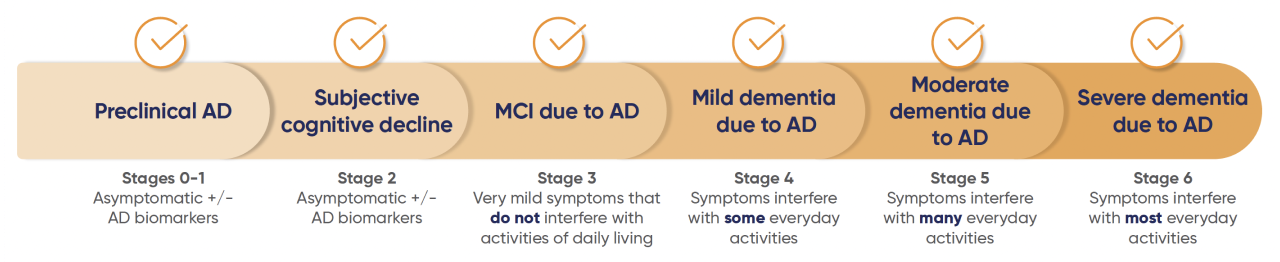
Early and Accurate Detection Can Potentially Alter the Trajectory of Disease Progression With DMT1-3
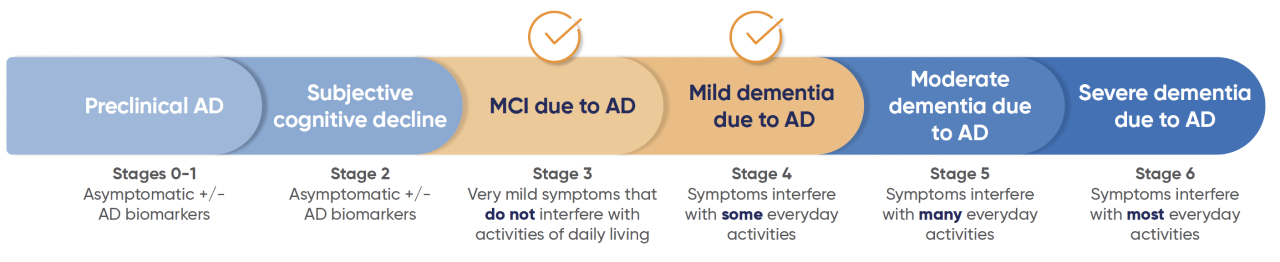
Symptomatic Treatment Can Help Many Patients and Caregivers Manage AD Dementia Symptoms
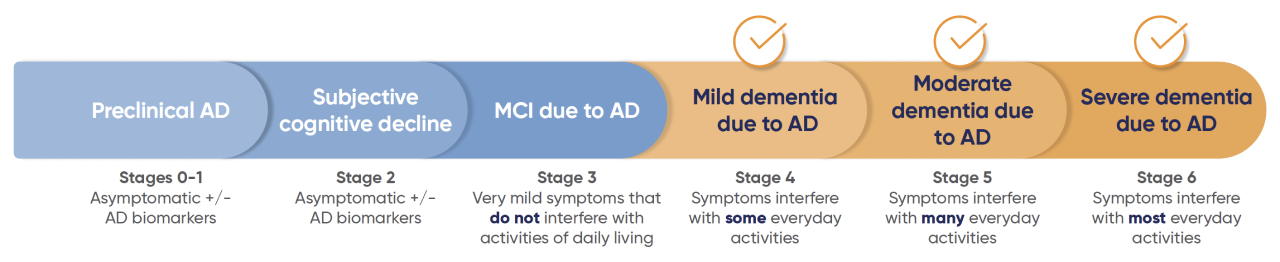
The PrecivityAD2® Test Can Help Optimize Clinical Decision-Making
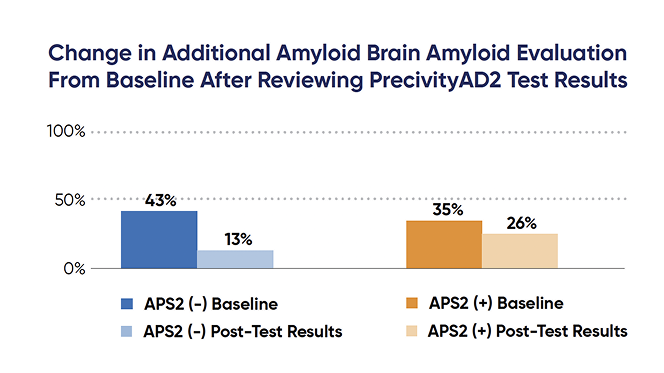
The QUIP-II study evaluated clinical use of the PrecivityAD2® test and changes in clinical confidence and planned management in 203 patients in real-world settings.
Clinicians used the test appropriately
Nearly all (99%) clinicians were able to use the test as intended in their practice settings.
Clinicians used the test appropriately
With a negative APS2 result, the clinician-reported probability for an AD diagnosis decreased from:
Clinicians were more certain patients did not have AD when they observed a negative test result
With a positive APS2 result, the clinician-reported probability for an AD diagnosis increased from:
Clinicians were more certain patients had AD when they observed a positive test result
Test results were clinically impactful and changed prescribing
of all patients had a medication change
119/203, P<.0001 vs prespecified threshold of 20% change
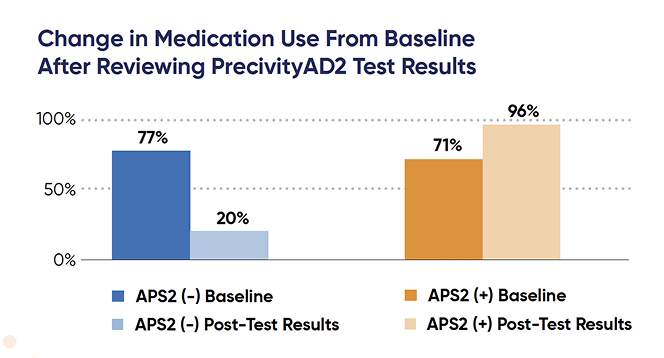
Test results impacted clinicians’ medical decisions
of all patients had a change in planned brain amyloid evaluation
119/203, P<.0001 vs prespecified threshold of 20% change
Understanding Alzheimer’s
Alzheimer's disease is the most common cause of dementia, a general term for memory loss and other cognitive issues serious enough to interfere with daily life. Alzheimer's disease accounts for 60-80% of dementia cases.


Understanding Alzheimer’s
Alzheimer's disease is the most common cause of dementia, a general term for memory loss and other cognitive issues serious enough to interfere with daily life. Alzheimer's disease accounts for 60-80% of dementia cases.
Understanding Alzheimer’s
Alzheimer's disease is the most common cause of dementia, a general term for memory loss and other cognitive issues serious enough to interfere with daily life. Alzheimer's disease accounts for 60-80% of dementia cases.
Understanding Alzheimer’s
Alzheimer's disease is the most common cause of dementia, a general term for memory loss and other cognitive issues serious enough to interfere with daily life. Alzheimer's disease accounts for 60-80% of dementia cases.
Upcoming Events
Lorem ipsum dolor sit amet, consectetur adipiscing elit. Suspendisse varius enim in eros elementum tristique. Duis cursus, mi quis viverra ornare, eros dolor interdum nulla, ut commodo diam libero vitae erat. Aenean faucibus nibh et justo cursus id rutrum lorem imperdiet. Nunc ut sem vitae risus tristique posuere.
Contact Us
4340 Duncan Avenue St. Louis, MO 63110
Toll free: 1-877-C2N-DIAG (226-3424)
If you are interested in ordering a PrecivityAD2® blood test, please complete the form at https://precivityad.com/order-the-test and a C2N staff member will be in touch with you.
The Precivity AD2 Test Provides Accurate and Individualized Predictive Value
- Less accurate and sensitive1-3
- Potential for nonspecific binding, leading to improper analyte detection
- Inability to do true multiplex; uses separate analyses and antibodies for each analyte4,6
- Sample dilution can affect test formation, while mass spectrometry optimizes sample analytes4

Lorem ipsum dolor sit amet, consectetur adipiscing elit, sed do eiusmod tempor incididunt ut labore et dolore magna aliqua. Ut enim ad minim veniam, quis nostrud exercitation ullamco laboris nisi ut aliquip ex ea commodo consequat. Duis aute irure dolor in reprehenderit in voluptate velit esse cillum dolore eu fugiat nulla pariatur.
The PrecivityAD2 Testing Platform UsesGold-Standard Mass Spectrometry Technology
Unique Advantages of C2N’s Mass Spectrometry Testing Platform
- Direct quantification of low- and highabundanceAD biomarkers in the blood1,2
- Multiplex enables analytes to be analyzed in a single run from a single plasma sample1,2
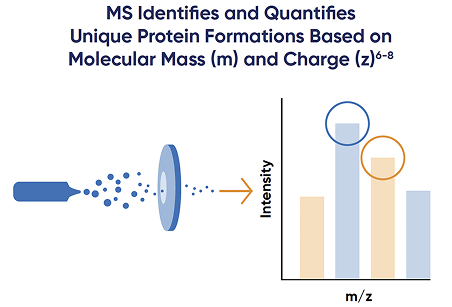
Lorem ipsum dolor sit amet, consectetur adipiscing elit, sed do eiusmod tempor incididunt ut labore et dolore magna aliqua.
- Robust performance compared to immunoassay testing, providing more personalized insights3,4
- High concordance with amyloid PET scans and CSF assays5

Lorem ipsum dolor sit amet, consectetur adipiscing elit, sed do eiusmod tempor incididunt ut labore et dolore magna aliqua.
FAQ
Dr. Randall Bateman, MD, Scientific Co-Founder, C2N Diagnostics
Currently the biomarkers can be used to diagnose people to see if they have amyloid plaques and if they do have amyloid plaques that's consistent with Alzheimer's disease. What that means for those patients is that if they meet other criteria they potentially could be treated. We could treat them to remove those amyloid plaques so that's currently happening. For the future, what's coming is the potential for prevention. If we could figure out when to treat people and how to treat people in a way to delay the onset of the symptoms, we might be able to give people years of dementia free life. These same biomarkers we can use to predict who is likely to get Alzheimer's disease based on the presence of those amyloid plaques as well as using other biomarkers to potentially predict when they might get it and to think about treatment paradigms of who to treat and what to treat them with.
Lorem ipsum dolor sit amet, consectetur adipiscing elit, sed do eiusmod tempor incididunt ut labore et dolore magna aliqua. Ut enim ad minim veniam, quis nostrud exercitation ullamco laboris nisi ut aliquip ex ea commodo consequat. Duis aute irure dolor in reprehenderit in voluptate velit esse cillum dolore eu fugiat nulla pariatur.
Lorem ipsum dolor sit amet, consectetur adipiscing elit, sed do eiusmod tempor incididunt ut labore et dolore magna aliqua. Ut enim ad minim veniam, quis nostrud exercitation ullamco laboris nisi ut aliquip ex ea commodo consequat. Duis aute irure dolor in reprehenderit in voluptate velit esse cillum dolore eu fugiat nulla pariatur.
Lorem ipsum dolor sit amet, consectetur adipiscing elit, sed do eiusmod tempor incididunt ut labore et dolore magna aliqua. Ut enim ad minim veniam, quis nostrud exercitation ullamco laboris nisi ut aliquip ex ea commodo consequat. Duis aute irure dolor in reprehenderit in voluptate velit esse cillum dolore eu fugiat nulla pariatur.
Lorem ipsum dolor sit amet, consectetur adipiscing elit, sed do eiusmod tempor incididunt ut labore et dolore magna aliqua. Ut enim ad minim veniam, quis nostrud exercitation ullamco laboris nisi ut aliquip ex ea commodo consequat. Duis aute irure dolor in reprehenderit in voluptate velit esse cillum dolore eu fugiat nulla pariatur.
Lorem ipsum dolor sit amet, consectetur adipiscing elit, sed do eiusmod tempor incididunt ut labore et dolore magna aliqua. Ut enim ad minim veniam, quis nostrud exercitation ullamco laboris nisi ut aliquip ex ea commodo consequat. Duis aute irure dolor in reprehenderit in voluptate velit esse cillum dolore eu fugiat nulla pariatur.
Lorem ipsum dolor sit amet, consectetur adipiscing elit. Suspendisse varius enim in eros elementum tristique. Duis cursus, mi quis viverra ornare, eros dolor interdum nulla, ut commodo diam libero vitae erat. Aenean faucibus nibh et justo cursus id rutrum lorem imperdiet. Nunc ut sem vitae risus tristique posuere.